Starting a real estate business can be an exciting venture, offering substantial opportunities for growth and financial success.
If you’re wondering how to start a real estate business, understanding the initial steps and essential strategies will set you up for long-term success.
Whether you are an aspiring agent, investor, or entrepreneur, the right approach will make all the difference in navigating this competitive industry.
The first important step to start a real estate business is developing a solid plan, identifying your niche, and ensuring you understand the legal and financial requirements.
Whether you want to operate as a broker, manage properties, or invest in real estate, each path comes with its unique challenges and opportunities.
Starting a real estate business also involves making smart decisions about funding, marketing, and generating leads to attract potential buyers and sellers.
In this guide, we’ll walk you through the fundamental aspects of starting a real estate business, including required licenses, cost-effective strategies, and the essential tools to succeed.
Whether you're looking to invest or build a full-scale agency, the right knowledge will help you turn your vision into a profitable reality. Learn the key steps to building a thriving real estate company from scratch today.
What is a Real Estate Business Startup?
Starting a real estate business is an exciting yet challenging venture that requires careful planning, strategic execution, and a clear understanding of market dynamics.
A real estate business startup involves several critical steps, from selecting a niche to ensuring legal compliance and acquiring the necessary licenses.
The following are the key points for real estate:
1. Timelines for Starting a Real Estate Business
The timeline to launch a real estate business can vary based on factors like licensing requirements, initial funding, and market conditions.
Typically, it may take anywhere from 3 to 6 months to get everything in place, including registering the business, securing funding, setting up the office, and building a client base. For real estate agents, it may take an additional 6 months to a year to generate consistent business.
2. Risks Involved
Starting a real estate business comes with inherent risks, including market fluctuations, competition, and legal compliance. Economic downturns or shifts in real estate trends can affect your income potential, especially if you're investing in properties or dealing with fluctuating rental prices.
3. Earning Potential
Despite the risks, the earning potential in real estate is significant. Once established, a real estate business startup can bring in consistent revenue through commissions, property management fees, and long-term investments.
With the right strategies and a good understanding of the market, real estate businesses can become highly profitable within a few years
3 Real Estate Business Ideas and Startup Approaches
Starting a real estate business can seem overwhelming at first, but breaking it down into manageable steps and choosing the right business model can significantly improve your chances of success.
Below, we’ll explore beginner-friendly, advanced options, and strategies to get started with little to no capital.
1. Real Estate Business Ideas for New Entrepreneurs
There are many real estate business ideas that can help you get started, whether you’re a beginner or have some experience. For newcomers, brokerage support roles like becoming a real estate agent or working as an administrative assistant at a brokerage provide an excellent entry point.
If you want to step up, consider rentals by purchasing single-family homes or small multifamily properties and renting them out.
Alternatively, real estate investment, such as buying, flipping, or holding properties for rental income, can offer higher returns but requires more capital and expertise.
2. Real Estate Business From Scratch
Building a real estate business from scratch requires careful planning, brand marketing development, and the right tools. Start by identifying a niche, such as residential properties, commercial leasing, or property management.
You’ll need to create a business plan, register your business, and secure any necessary licenses.
Focus on branding designing a professional logo, website, and marketing materials to build credibility. Establishing solid systems for lead generation, communication, and project management is essential for efficiency.
3. Real Estate Business With No Money
Starting a real estate business with no money is possible through low-capital strategies like partnerships or wholesaling.
Wholesaling allows you to find distressed properties and sell them to investors without needing to purchase them yourself.
Partnering with investors or other agents is another great way to reduce upfront costs. In addition, referral networks can help generate leads and commissions without requiring significant financial investment.
Grow Your Real Estate Brand with Real Estate Digital Marketing Agency
How to Start a Real Estate Business? (6 Steps)
Starting a real estate business requires following a clear, methodical process. Each step plays a critical role in establishing your foundation, generating revenue, and scaling your operations.
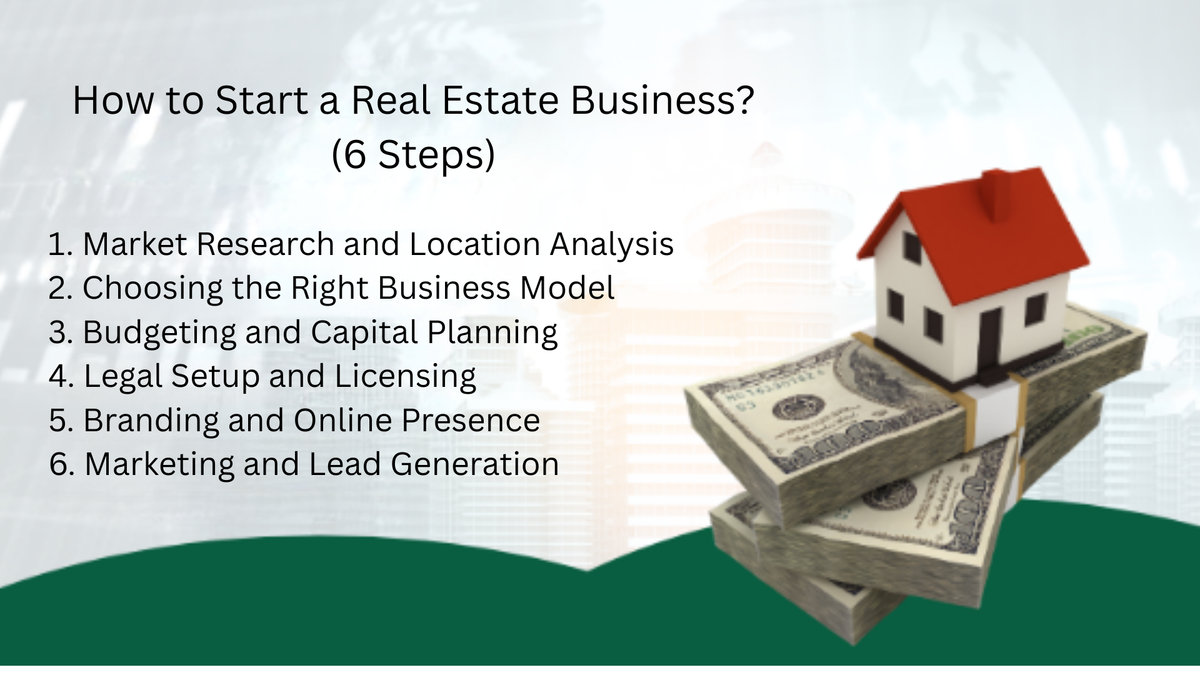
Below is a breakdown of the essential steps to take when launching your real estate business.
1. Market Research and Location Analysis
Conduct thorough market research to understand local property trends, demand, pricing, and market saturation. Identify areas with growth potential and examine local competition. This analysis will help you understand where to focus your business efforts, whether it's residential, commercial, or rental properties.
2. Choosing the Right Business Model
Selecting the right business model is key to success in real estate. Decide whether you want to run a brokerage, invest in properties, manage rentals, or offer property-related services like property management. Your model will determine your revenue stream, so consider factors like capital requirements, competition, and expertise before making a decision.
3. Budgeting and Capital Planning
Create a detailed budget that covers your startup costs and ongoing operational expenses. Establish how much capital you need to invest in properties, marketing, staff, and office setup. Ensure you have a reliable source of funding, whether through personal savings, loans, or investors.
4. Legal Setup and Licensing
Complete the necessary legal setup by registering your business and obtaining the required licenses for your real estate operations. Ensure you comply with local regulations, including zoning laws and licensing for agents or brokers. Legal compliance is essential to protect your business and ensure long-term success.
5. Branding and Online Presence
Develop a professional brand identity that includes a logo, business name, and a strong online presence. Create a website that showcases your services and listings, and make sure it’s optimized for SEO. An online presence is essential for attracting clients and establishing credibility in the market.
6. Marketing and Lead Generation
Invest in marketing strategies to build your client base. Utilize SEO, social media, and paid advertising to generate leads. Develop relationships with local businesses, real estate agents, and investors to expand your network. Effective lead generation strategies will ensure a steady stream of clients and deals.
How Real Estate Businesses Operate?
Real estate businesses generally work by acting as intermediaries between buyers and sellers, tenants and landlords, or investors and developers.
They may focus on property sales, rentals, property management, or real estate investments. Some businesses, like brokerages, primarily deal with transactions, earning commissions, while others, like property management firms, earn through ongoing service fees for maintaining properties.
Revenue Generation in Real Estate
The real estate business model generates revenue in various ways:
-
Commissions from property sales or leases
-
Property management fees for maintaining and renting out properties
-
Investment income from property appreciation and rental yields
-
Flipping profits from buying, renovating, and selling properties
-
Real estate development profits from new construction projects
4 Types of Profitable Real Estate Business Models
There are various profitable real estate business models, each catering to different market needs and offering unique opportunities for growth and revenue generation.
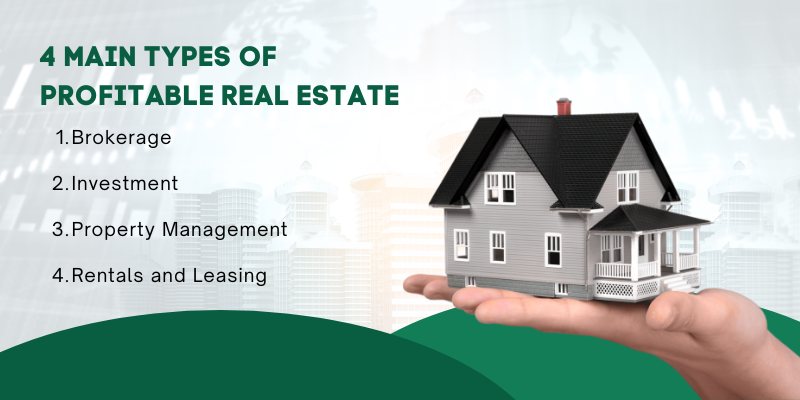
Understanding these models helps you decide the best path based on your interests, capital, and market conditions.
Here are some of the main types of profitable real estate

1. Brokerage
Real estate brokerage is one of the most common and profitable business models. Brokers connect buyers and sellers, charging a commission for each successful transaction.
This model offers significant earning potential through commission-based revenue, especially when working in high-value markets. Brokerages can also diversify by offering additional services such as market analysis, property appraisal, and property management.
2. Investment
Real estate investment involves buying properties to generate returns either through property appreciation, rental income, or both.
This model can be highly profitable, especially in markets with high growth potential. Investors may focus on residential, commercial, or industrial properties, using strategies like buy and hold, fix and flip, or wholesaling.
3. Property Management
Property management companies handle the day-to-day operations of rental properties, including tenant relations, maintenance, and rent collection.
In exchange for these services, they charge management fees, often a percentage of the rent. This model can generate steady, passive income while maintaining long-term client relationships.
4. Rentals and Leasing
Rentals and leasing involve owning properties and renting them out to tenants. This model offers steady cash flow through monthly rental income.
Landlords can focus on residential or commercial spaces, ensuring consistent revenue. Leasing properties, particularly commercial spaces, can offer longer-term contracts, reducing vacancy risks.
4 Real Estate Business Requirements and Legal Setup
Before starting a real estate business, it's essential to understand the legal, financial, and operational requirements. Establishing a strong foundation will help ensure compliance and smooth operation. Below, we outline the key steps and requirements to get your business off the ground.
1. Real Estate Business Requirements
A real estate business has specific legal, financial, and operational needs to ensure it functions properly and complies with regulations.
Legal requirements include obtaining the right business licenses, adhering to local zoning laws, and ensuring you have contracts in place for clients and partners.
Banks & Finance requirements involve securing capital for operations, managing taxes, and maintaining appropriate insurance. On the operational side, ensure you have the necessary staff, technology, and systems to manage property listings, sales, and client interactions.real estate marketing is a combination.
Check Our Digital Marketing Agency for Banks & Finance
2. Real Estate License Requirements
To operate legally, most regions require a real estate license. Depending on your location, you’ll need to complete educational requirements, pass an exam, and renew your license periodically.
The licensing process ensures that you are qualified to represent buyers, sellers, and landlords. It’s crucial to stay current with renewal dates and ongoing professional development to maintain compliance and uphold industry standards.
3. Real Estate Company Registration
Choosing the right business structure (sole proprietorship, LLC, corporation, etc.) is essential for liability protection and tax purposes.
After selecting your structure, you’ll need to complete the company registration process, which typically involves filing with your local government and obtaining an employer identification number (EIN). You’ll also need to set up a business bank account and create financial records to maintain compliance with tax authorities.
4. How to Open a Real Estate Company
To open a real estate company, follow a practical checklist:
-
Pre-launch: Conduct market research, finalize your business plan, choose your business model, and set up finances.
-
Launch: Register your company, secure a real estate license, establish your brand, and develop your online presence.
-
Post-launch: Start marketing your services, generate leads, build a client base, and set up operational systems for property management and sales.
Marketing, Lead Generation, and Business Tools
To grow and scale your real estate business, effective marketing, consistent lead generation, and the right business tools are essential. These components help you reach potential clients, build your brand, and optimize operations.
Below, we break down strategies and tools to accelerate your business growth and acquisition.
1. Real Estate Marketing Strategies
Effective real estate marketing is a combination of both digital and offline strategies that help build brand visibility and establish trust with your target audience.
The following are the key factors for both digital and offline marketing:
-
SEO (Search Engine Optimization): Optimize your website and content for search engines to ensure you rank for local property keywords and generate organic traffic.
-
Social Media Marketing: Platforms like Facebook, Instagram, LinkedIn, and Twitter are essential for engaging with potential clients and showcasing properties.
-
Paid Advertising: Use Google Ads, Facebook Ads, and Instagram ads to target specific demographics and increase visibility.
-
Content Marketing: Publish helpful blog posts, videos, and virtual tours to engage and educate your audience while positioning your business as a trusted authority.
-
Networking: Attend local real estate events, join community organizations, and build relationships with other agents, brokers, and investors.
-
Referrals: Encourage satisfied clients to refer friends and family, providing them with incentives or discounts.
-
Direct Mail: Send postcards, brochures, or flyers to targeted areas to showcase new listings, promotions, or your services.
2. Real Estate Lead Generation
Attracting buyers, sellers, and investors consistently is the key to growing your business. Implement a variety of lead generation strategies:
-
Website Lead Capture: Design a user-friendly website with clear calls-to-action (CTAs) and lead capture forms. Offer valuable content (market reports, guides) in exchange for visitor contact information.
-
Email Marketing: Build an email list and send regular updates, newsletters, and personalized property recommendations to keep leads engaged.
-
Online Ads: Use targeted online ads to reach specific buyer or seller segments, utilizing demographic, geographic, and behavioral data.
- Partnerships: Build relationships with local businesses, contractors, and mortgage brokers for cross-promotion and referral leads.
3. Real Estate Business Tools
The right business tools are essential for managing client interactions, streamlining operations, and enhancing productivity.
Here are key tools for real estate businesses:
-
CRM Systems: Customer Relationship Management (CRM) systems like Salesforce or HubSpot help track interactions with leads and clients, manage follow-ups, and automate communications.
-
Listing Platforms: Use MLS (Multiple Listing Service) platforms, Zillow, Realtor.com, and local property sites to post your listings and generate traffic.
-
Analytics Tools: Google Analytics, SEMrush, and social media insights help monitor website traffic, track conversions, and assess the effectiveness of your marketing tactics.
-
Automation Software: Tools like Zapier and Mailchimp can automate repetitive tasks like email campaigns, lead notifications, and data entry, saving you time and improving efficiency.
FAQs
How to Start Your Own Real Estate Brokerage Firm?
To start your own real estate brokerage firm, begin by obtaining the necessary licenses and certifications required in your area. Choose a business model, whether focusing on residential, commercial, or both markets. Develop a strong brand identity and build a network of agents. Finally, implement effective marketing strategies and business tools to attract clients and grow your business.
Is a real estate license mandatory?
Yes, a real estate license is typically required to operate legally in most regions. To obtain a license, you must complete pre-licensing courses, pass an exam, and meet any state or regional requirements. Some roles, like property management or investment, may not require a license, but it’s essential for agents and brokers.
How long does it take to become profitable?
Becoming profitable in real estate can take anywhere from 6 months to 2 years, depending on your business model and market conditions. Brokerage businesses may take longer to generate consistent revenue, while property investors can see returns within months if the right properties are purchased.
Can you start a real estate business part-time?
Yes, you can start a real estate business part-time. Many new entrepreneurs begin by working as a part-time real estate agent or investor while continuing with another job. Over time, you can scale your business as you gain experience and capital.
Conclusion
Now you have understood how to start a real estate business, lets conclude. It involves understanding the legal setup, selecting the right business model, and implementing effective marketing strategies.
By securing the necessary licenses, developing a strong brand, and utilizing the right business tools, you can lay a solid foundation for your real estate venture.
When starting a real estate business, choose a model that aligns with your goals, whether it's investing, brokerage, or property management.
Use digital marketing, lead generation, and business tools to grow your client base and streamline operations. Centric can assist you in optimizing your marketing strategies with data-driven solutions and innovative tools.
With the right planning, persistence, and strategies, you can create a profitable and sustainable real estate business.