![What is UX Design [Explained 2026]](/insights/10259/image-thumb__10259__1920x1446/what%20is%20ux%20design@2x.webp)

What is UX design, and why does it matter in today’s digital world? If you’ve ever used a website or app that felt simple, smooth, and easy to navigate, you’ve already experienced the impact of great UX.
At its core, UX Design is not just about how a product looks but how it works. It involves the entire process of acquiring, integrating, and interacting with the product, including aspects of branding, visual design, usability, and functionality.
UX designers research and analyze user feedback, creating wireframes and prototypes that are tested and refined to ensure the final product meets the users’ expectations.
The goal of UX Design is to create digital products that not only solve problems but also enhance the user’s journey, leading to increased satisfaction and loyalty. It combines elements of psychology, design, and technology to ensure a user-centered approach throughout the design process.
This blog will explore what UX design is, its importance in digital products, and the key principles that guide designers in creating exceptional user experiences.
What is User Experience (UX)?
UX stands for User Experience, which refers to how a user interacts with a product or service. It encompasses all aspects of the user's interaction with the system, from usability to accessibility and overall satisfaction.
The primary goal of UX is to ensure that users can interact with a product or service in a seamless, efficient, and enjoyable way.
It focuses on understanding user behaviors, needs, and challenges to create intuitive interfaces that provide a positive experience.
By maximizing user satisfaction, UX design helps build trust, enhance usability, and foster engagement, leading to higher user retention and success for the product.
What is UX Design?
UX Design is the practice of enhancing the usability, accessibility, and overall pleasure a user experiences when interacting with a product or service.
A well-executed design services aims to make the user's journey as seamless and intuitive as possible, ensuring satisfaction throughout the interaction.
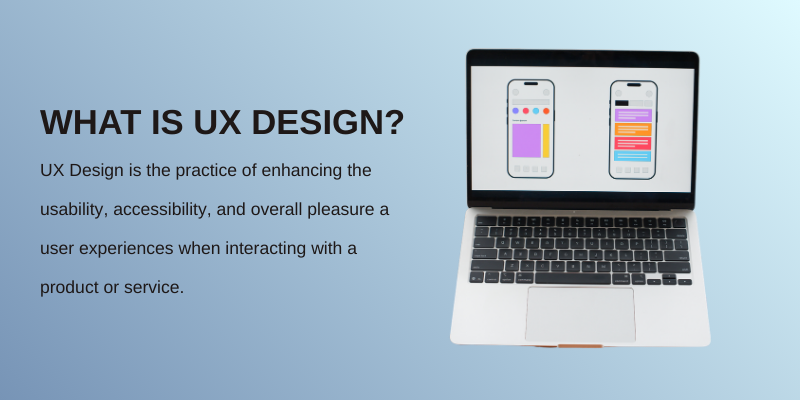
UX Design covers all stages of the product development process, including research, design, testing, and implementation.
It begins with understanding user needs and behaviors, followed by creating prototypes, conducting usability testing, and refining the design based on feedback.
The ultimate goal is to create a final product that aligns with user expectations and solves their problems efficiently, making their experience with the product both pleasant and effective.
Improve Your UX Experiences with Design services
Why is UX Design Important?
A well-designed UX boosts user satisfaction, fosters trust, and encourages repeat interactions. It ensures users have an enjoyable and efficient experience, which leads to greater engagement and loyalty.
On the other hand, bad UX can result in frustration, reduced product adoption, and the loss of customers. Poor design can drive users away and damage a brand's reputation, making it harder to retain users.
Good UX design has a direct impact on business success. It improves conversion rates, enhances customer loyalty, and increases retention by providing users with a smooth and enjoyable experience.
Additionally, it helps reduce development costs over time. By addressing user needs and issues early in the process, businesses can avoid costly revisions and ensure the final product meets user expectations, saving both time and money.
What is the Difference Between UX and UI?
When discussing what is UX design, it’s common to hear it mentioned alongside UI design. While they are closely related and often work together, they are not the same.
|
Aspect |
UX (User Experience) |
UI (User Interface) |
|
Focus |
Overall user journey and functionality |
Visual design and interactive elements |
|
Goal |
Make the product useful, usable, and meaningful |
Make the product visually appealing and engaging |
|
Process |
Research, wireframing, prototyping, testing |
Designing layouts, colors, typography, and components |
|
Concerned With |
User needs, pain points, usability, flow |
Look, style, branding, and responsiveness |
|
Outcome |
Smooth and intuitive experience |
Attractive and consistent interface |
The Role of a UX Designer
A UX Designer focuses on creating the best possible experience for users by ensuring the product is intuitive, efficient, and enjoyable. Their role involves understanding user needs and translating them into a user-friendly design.
Responsibilities include conducting user research, creating wireframes and prototypes, performing usability testing, and collaborating with developers to bring the design to life. UX designers play a crucial role in shaping the user experience from concept to final product.
Here are some of the skills required for UX designers
-
Proficiency in UX Design Tools: Tools such as Figma, Sketch, and Adobe XD are essential for creating wireframes, prototypes, and visual layouts.
-
Knowledge of UX Principles: Understanding user-centered design, information architecture, and interaction design is critical to creating effective user interfaces.
-
Usability Testing: Conducting tests with real users helps identify usability issues and refine the user flow to ensure the product is easy to use.
-
Collaboration: UX designers work closely with UI designers, developers, and product managers to ensure the design aligns with the overall vision and functionality.
- Problem-Solving: UX designers must be skilled at finding innovative solutions to design challenges, ensuring that users have a seamless and enjoyable experience.
What Are the Key Skills of a UX Designer
Here are some of the key skills for success in UX design
-
Empathy: Understanding the users' emotions, behaviors, and needs is essential for designing experiences that are centered around the user. This helps UX designers create products that are intuitive and meet real user needs.
-
Research Skills: Collecting and analyzing data through methods like surveys, interviews, and usability tests is crucial. This information guides the design process, ensuring decisions are based on user insights rather than assumptions.
-
Prototyping and Wireframing: Using tools like Figma and Sketch, UX designers create low-fidelity designs and interactive prototypes to test ideas and validate concepts before moving forward with development.
-
Communication: Clear communication is key in UX design. Designers need to articulate design ideas effectively and collaborate with various stakeholders, including developers, product managers, and other designers, to ensure alignment on the product vision.
-
Attention to Detail: UX design involves focusing on every small detail, from layout to color scheme, ensuring that all design elements contribute to a seamless, enjoyable user experience. This attention to detail helps improve usability and create visually appealing interfaces.
UX Design and User Experience Services
UX design services are customized solutions provided by agencies or freelancers aimed at enhancing a product’s user experience.
These services are designed to address specific user needs and ensure that the product is intuitive, accessible, and enjoyable to use.
Professional UX design services guarantee the creation of high-quality digital design products that are optimized for user satisfaction.
These services focus on making products intuitive, accessible, and user-friendly, which leads to improved user engagement.
These services typically include:
-
User Research: Conducting research to understand user behaviors, needs, and pain points.
-
Interaction Design: Designing interactive elements to create an engaging and efficient experience.
-
Usability Testing: Testing the product with real users to identify usability issues and ensure it meets user expectations.
- UI Design: Creating visually appealing interfaces that are both functional and aligned with the product’s goals.

UX Design Tools and Technologies
Modern UX design leverages user-centered design principles along with a range of tools that seamlessly integrate into the development workflow.
These technologies enhance collaboration between design and development company, allowing for faster iteration, improved testing, and more efficient delivery of user-friendly products.
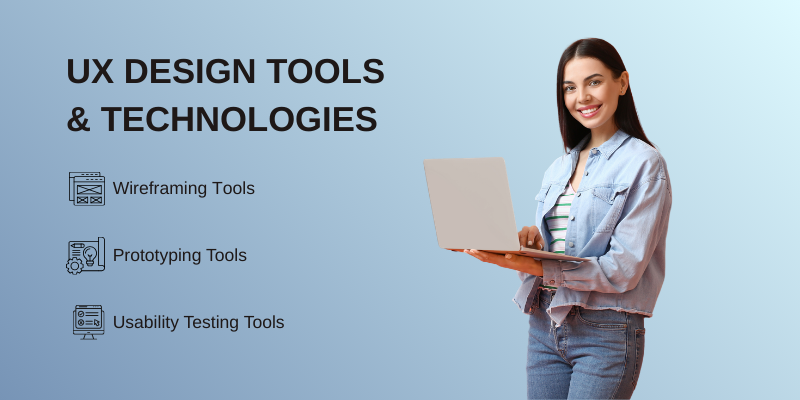
Here are some of the essential tools for UX designers
-
Wireframing Tools: Tools like Figma, Sketch, and Adobe XD are essential for creating wireframes, which provide a blueprint of the design layout. These tools help designers visualize the structure and flow of the user interface before moving on to more detailed design work.
-
Prototyping Tools: InVision, Axure, and Proto.io allow designers to create interactive prototypes, simulating the actual user experience. Prototypes are key for testing designs, gathering feedback, and ensuring the product meets user expectations before full development begins.
-
Usability Testing Tools: Platforms like UserTesting, Hotjar, and Maze are used to test designs with real users. These tools help identify usability issues, gather valuable insights, and make data-driven decisions to improve the user experience.
Becoming a UX Designer
To start a career in UX Design, begin by learning the core principles of design and familiarizing yourself with essential design tools like Figma, Sketch, and Adobe XD.
Building a strong portfolio is crucial. Work on personal projects, gain experience through internships, or take on freelance work to showcase your skills and design process.
Engage with the broader UX community by joining forums, attending events, and collaborating with other designers to stay updated and learn from industry leaders.
FAQs
What is UX design?
UX design is the process of creating user-friendly experiences by improving the usability, accessibility, and interaction with a product or service.
Why is UX design important for businesses?
Good UX design enhances user satisfaction, increases customer loyalty, and improves business performance by optimizing usability and functionality.
What skills are needed to be a UX designer?
Key skills include empathy, problem-solving, research, prototyping, wireframing, and effective communication.
What is the difference between UX and UI design?
UX design focuses on the overall experience and usability, while UI design is concerned with the visual layout and interactive elements.
How does UX design improve a product?
By addressing user needs and preferences, UX design ensures products are intuitive, easy to navigate, and function effectively.
What is the role of user research in UX design?
User research helps UX designers understand the behaviors, needs, and pain points of users, which informs design decisions and ensures the product meets user expectations.
What tools do UX designers use?
UX designers commonly use tools like Figma, Sketch, Adobe XD for wireframing and prototyping, and UserTesting, Hotjar for usability testing.
Can UX design be learned online?
Yes, many online courses, tutorials, and resources are available to learn UX design principles, tools, and practices. Gaining hands-on experience through projects is essential for mastery.
What industries hire UX designers?
UX designers are in demand across a variety of industries, including tech, e-commerce, healthcare, finance, education, and media, as companies prioritize user-centered design for better engagement and satisfaction.
Is UX design a good career?
Yes, UX design is a fast-growing field with high job demand and excellent career opportunities. It offers a chance to work on meaningful projects that impact how users interact with products and services.
Conclusion
Now that you understand What is UX Design, let's wrap up.
In essence, UX Design is about creating the best possible experience for users, ensuring their needs are met in the most intuitive and satisfying way.
A skilled UX Designer plays a critical role in achieving this, using their expertise to design functional, user-friendly products that solve real problems.
Whether for websites, apps, or digital platforms, user experience design is a fundamental part of delivering quality digital solutions. Centric focuses on improving usability, accessibility, and the overall satisfaction of users, ensuring that every interaction is seamless and enjoyable.