In today’s digital-first world, every business needs to understand why web design is important.
Your website is often the first interaction someone has with your brand, and that first impression can shape how they see your credibility, professionalism, and reliability.
Web design refers to the planning, structure, layout, and visual presentation of a website. For businesses, it plays a crucial role in creating strong first impressions, guiding user behavior, and making digital experiences intuitive and engaging.
A well-designed website helps users find information easily, encourages them to take action, and builds long-term credibility.
From navigation and responsiveness to branding and performance, web design strongly influences conversions, customer retention, and overall business success.
This blog explores why web design is important for businesses, covering its impact on user experience, conversions, branding, and growth. It explains how smart design decisions support business goals and long-term digital success.
What is Web Design?
Web design is the process of organizing content, visuals, and functionality on a website in a way that feels clear, engaging, and easy to use. It’s about presenting information so visitors instantly understand who you are, what you offer, and what they should do next.
But web design is more than just making a site “look good.” It requires thoughtful planning, a clear structure, and a careful balance between creativity and usability. Every element, from layout and typography to color, spacing, and navigation, works together to shape the overall user experience.
What Are The Key Components of Web Design?
Web design can feel complex, but at its core, it’s built on a few essential components.
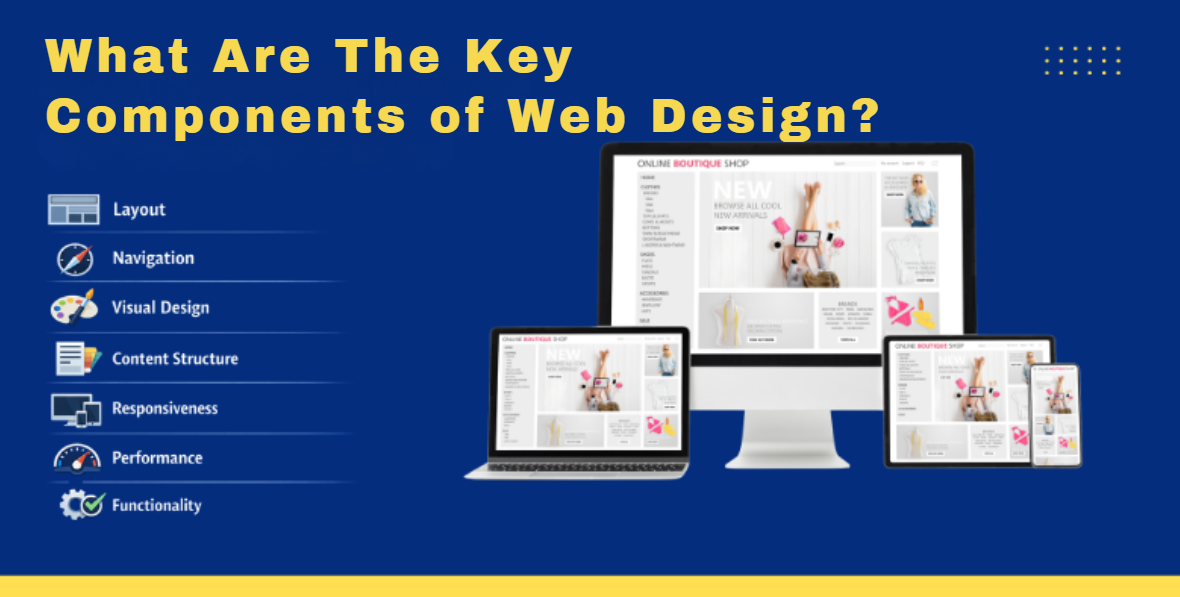
When these fundamentals work together, they create a website that looks professional, functions smoothly, and feels easy to use.
- Layout: The structure of your website. It determines how content is arranged on each page and how users move from one section to another. A clean, well-organized layout makes information easy to scan and understand.
- Navigation: How users move around your site. Clear menus, logical page hierarchy, and simple navigation help visitors find what they’re looking for without frustration.
- Visual Design: This includes colors, typography, images, icons, and overall styling. Strong visual design supports your brand identity and creates a consistent look and feel.
- Content Structure: Content isn’t just what you say—it’s how you present it. Headlines, subheadings, spacing, and formatting make information digestible and engaging.
- Responsiveness: A website should work smoothly on all devices, desktop, tablet, and mobile. Responsive design ensures your layout adapts to different screen sizes without breaking the experience.
- Performance: Speed matters. Fast-loading pages improve user satisfaction and reduce bounce rates.
- Functionality: Forms, buttons, search bars, and interactive elements should work exactly as users expect. Good functionality builds trust and encourages action.
When these basics are thoughtfully combined, they form the foundation of effective web design.
Why Web Design is so Important to Your Business?
Your website is not just a digital brochure; it’s your online storefront, sales representative, and brand ambassador all in one.
The way it looks, feels, and functions directly impacts how people perceive your business and whether they choose to engage with you.
Here are five key reasons web design plays a critical role in business success:
Creates a Strong First Impression That Builds Immediate Trust
Users form opinions about your website within seconds. A clean, modern, and professional design signals credibility and reliability. The right design services can ensure that your website reflects the quality and trustworthiness of your brand.
On the other hand, an outdated or cluttered layout can make visitors question your legitimacy. Good design reassures users that they are in the right place and encourages them to stay longer.
Enhances User Experience by Making Information Easy to Find and Understand
When your website is structured logically with clear navigation and readable content, users can quickly access what they need. This reduces frustration and increases engagement.
Thus, a smooth experience keeps visitors exploring your site instead of leaving for a competitor.
Strengthens Brand Identity Through Consistent Visual and Messaging Elements
Consistent use of colors, fonts, imagery, and tone of voice reinforces your brand personality. Over time, this familiarity builds recognition and loyalty. A well-designed website ensures your brand message is clear and aligned across every page
Increases Conversions by Guiding Users Toward Clear Actions
Strategic placement of buttons, forms, and calls-to-action helps guide visitors toward specific goals, whether it’s making a purchase, booking a consultation, or signing up for a newsletter. Good design reduces distractions and supports decision-making.
Supports Long-Term Business Growth Through Performance and Adaptability
Responsive design, fast loading speed, and scalable structure ensure your website performs well across devices and can evolve as your business grows.
A strong digital foundation makes it easier to integrate new features, optimize for search engines, and stay competitive in the market.
What Is the Difference Between Web Design and Development?
Many people use web design and development interchangeably, but they serve different purposes in the website creation process. Design focuses on how a website looks and feels, while development focuses on how it works behind the scenes.
Both are essential, and when they work together, they create a complete and functional digital experience.
|
Aspect |
Web Design |
Web Development |
|
Focus |
Visual appearance and user experience |
Technical structure and functionality |
|
Goal |
Make the website attractive, intuitive, and user-friendly |
Make the website functional, secure, and fast |
|
Responsibilities |
Layout, colors, typography, branding, wireframes, UI/UX |
Coding, databases, server setup, integrations |
|
Tools Used |
Figma, Adobe XD, Sketch, Photoshop |
HTML, CSS, JavaScript, React, PHP, Node.js |
|
Output |
Design mockups, prototypes, style guides |
Working website, backend systems, APIs |
|
User Impact |
Shapes first impressions and user journey |
Ensures smooth performance and interaction |
In simple terms, design is what users see and experience, while development is what makes everything actually work. Both are equally important for building a successful website.

4 Key Factors That Make Web Design Effective
Key factors that make web design effective focus on creating a smooth, engaging, and goal-oriented user experience.
These factors help ensure the website is easy to use, visually appealing, and aligned with business objectives.
1. Responsive Design
Ensures the website adapts seamlessly across desktops, tablets, and mobile devices, providing a consistent and user-friendly experience everywhere.
2. Clear Navigation
Helps users find what they need quickly through logical menus, clear labels, and an intuitive site structure.
3. Content Layout & Visual Appeal
Organizes content in a clean, readable way while using visuals to capture attention, keep users engaged, and reduce bounce rates.
4. Branding Elements
Uses consistent colors, fonts, imagery, and logo placement to strengthen brand identity, build trust, and create a memorable experience.
How Web Design Affects Conversion Rates?
Web design doesn’t just make a website look good; it has a measurable impact on how many visitors complete desired actions (like buying, signing up, or contacting you).
Conversion rate is the percentage of users who take these actions, and research shows that design plays a central role in shaping this behavior.
Research shows a strong link between how usable a website is and its conversion rate. A comprehensive analysis of website usability found a significant relationship between usability and online customer conversions, meaning that when visitors find a site easy to navigate and interact with, they are more likely to convert.
Research also demonstrates that usability enhancements, especially mobile optimization and accessibility, increase user satisfaction and conversions. A study of e-commerce businesses in Indonesia found that improved usability and mobile responsiveness increased customer satisfaction, which in turn raised sales conversion rates.
The Interplay of Web Design, UX, Conversions, and SEO
The interplay of web design, UX, conversions, and SEO services creates a connected ecosystem that shapes the entire user journey from the first click to the final action.
Web design provides the visual and structural foundation of a website, UI and UX services ensure that visitors can navigate and interact with it effortlessly, SEO drives qualified traffic to the site, and conversions represent the successful outcome of this journey. When any one of these elements is weak, the overall experience suffers.
A well-designed website improves UX by making navigation intuitive, content easy to consume, and interactions predictable.
Strong UX keeps users engaged, reduces bounce rates, and sends positive signals to search engines, supporting better SEO performance. SEO, in turn, brings users who are actively searching for relevant information or solutions, increasing the likelihood of meaningful engagement and conversions.
-
To balance design aesthetics with functionality:
-
Focus on clarity over visual overload, ensuring design elements support usability
-
Maintain consistent layouts and visual hierarchy to guide user attention
-
Optimize page speed and responsiveness without compromising design quality
-
Design CTAs that are visually appealing but easy to understand and act upon
When web design, UX, SEO, and conversions are aligned, they work together to create a seamless, engaging, and high-performing digital experience that benefits both users and businesses.
Grow Your Online Visibility with our SEO Services
FAQs
Why is web design important for business growth?
Web design is important because it shapes first impressions, builds trust, and influences how users interact with a brand. A well-designed website helps attract visitors, improve engagement, and support conversions, all of which contribute to long-term business growth.
How does web design improve user experience (UX)?
Web design improves UX by making websites easy to navigate, visually clear, and accessible across devices. Good design reduces confusion, improves readability, and allows users to complete tasks smoothly and efficiently.
Can web design affect conversion rates?
Yes, web design directly affects conversion rates. Clear layouts, strong calls to action, and trust-building elements encourage users to take desired actions such as signing up, contacting a business, or making a purchase.
What is the relationship between web design and SEO?
Web design impacts SEO through factors like page speed, mobile responsiveness, and structured content. Search engines favor websites that offer fast, user-friendly, and well-organized experiences.
How often should a website design be updated?
A website design should be reviewed regularly and updated every few years or when user behavior, technology, or business goals change to maintain performance and relevance.
Conclusion
Why web design is important is a question that sits at the core of digital success for any business. Why web design is important becomes clear when you look at its direct impact on growth, visibility, and customer engagement. Web design plays a crucial role in driving real business outcomes by shaping how users experience a brand online, which is why professional platforms and agencies like Centric focus on creating websites that deliver measurable results. A well-designed website improves user experience by making interactions smooth, intuitive, and accessible across devices.
It boosts conversions by guiding users toward clear actions and building trust through professional visuals and structure. At the same time, strong web design supports SEO efforts by improving page speed, mobile performance, and content structure, helping businesses attract and retain the right audience. When web design aligns with UX, conversions, and SEO, it becomes a powerful digital asset that supports long-term business success and competitive advantage.